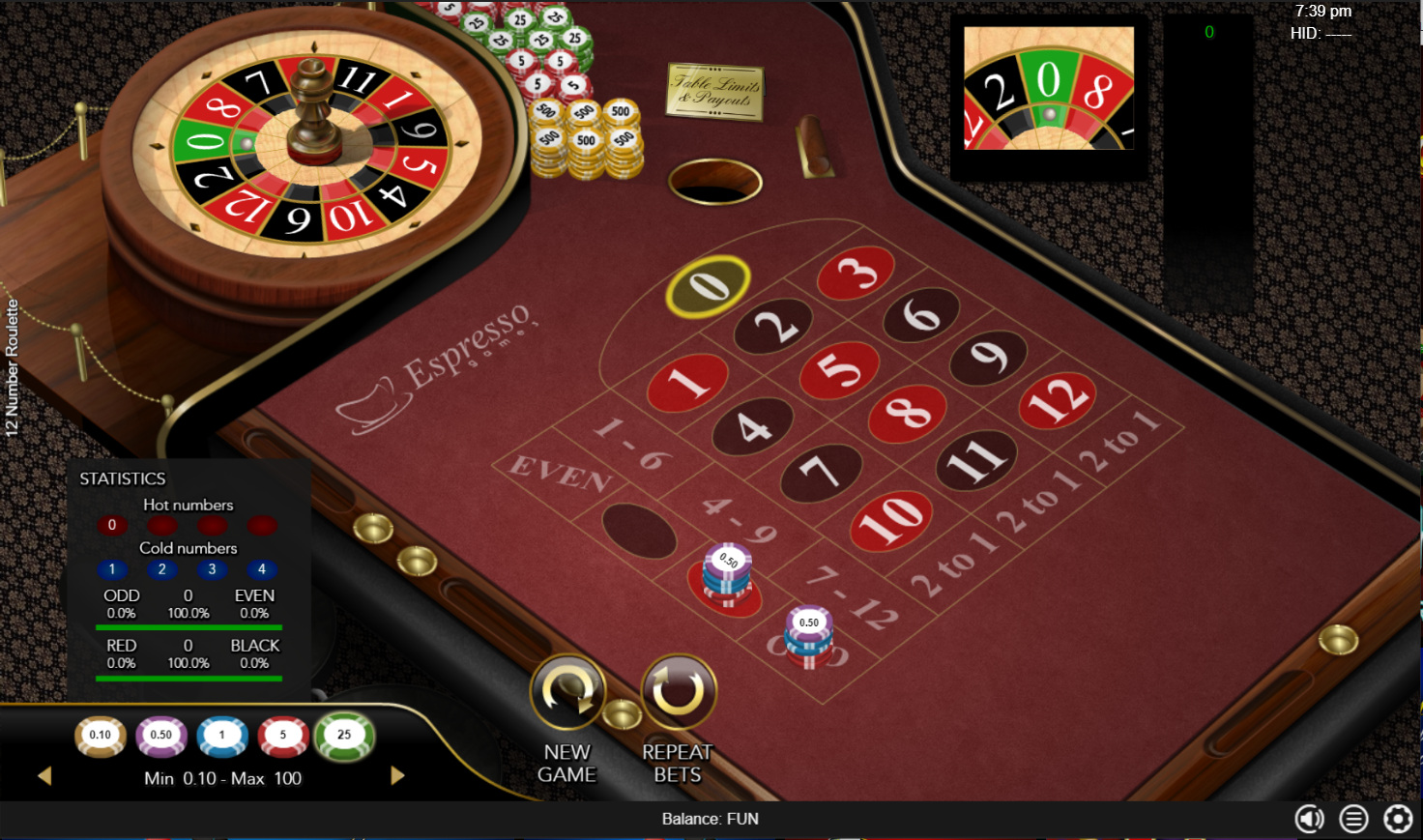



Apollo Petite Roulette puts 13 pockets, numbered 0-12, on a compact roulette table. Apollo Games adds random 2x-20x multipliers and a paytable made for the smaller wheel. This review explains the bets, base payouts and repeat-bet controls, so you can see what changes before trying the free version.
Game rules
The first thing you'll notice is the wheel: there are just 13 pockets, numbered 0 to 12. Pick a chip from the stack on the right, place your bets on the grid and use the circular Start control to send the wheel spinning.
You can keep your selection as simple or as detailed as you like. Back one number, spread chips across adjoining numbers, or choose red or black and odd or even. The compact board also has four-number column bets, so there are still several ways to cover the table despite its smaller size.
What makes it special?
The reduced wheel changes how you read the table. You can see every number at once, and a single-number bet covers a larger share of the wheel than it does on a standard European table. The payouts change too, so the smaller wheel does not automatically offer better value.
There's also a random multiplier feature. Before the wheel spins, it can select up to seven positions from 0 to 12 and assign multipliers from 2x to 20x. A qualifying win is multiplied by the value attached to the winning position. Your button presses and staking pattern do not influence the multiplier.
Payouts and betting controls
The provider's embedded help displays the base payouts below. The published Apollo Petite Roulette rules hosted by Gapa Group explain the stake convention: a one-unit straight-up win pays 11 units of profit plus the original stake, giving 12 units back before a random multiplier. Those published-rule totals match the displayed x labels. Use this paytable rather than carrying over the familiar 35:1 straight-up profit odds from conventional roulette.
| Bet | Numbers covered | Total return (includes stake) |
|---|---|---|
| Straight-up | 1 | 12x |
| Split | 2 | 6x |
| Street or trio | 3 | 4x |
| Corner, column or basket | 4 | 3x |
| Line, red/black or odd/even | 6 | 2x |
Rebet lets you put your previous selection back on the board, with time to adjust it before starting. There's also a double-stake repeat option, alongside Clear All and Step Back. Those last two are useful when you're learning where to place chips: you can undo one placement without rebuilding the entire bet.
Getting to grips with the smaller wheel
Start by trying individual numbers and then a few combinations. With fewer pockets to follow, it's easier to see which numbers each selection covers. Keep an eye on the total stake when you add more chips, especially when using the double-stake repeat control.
REBET 2X doubles every chip in the previous selection. It changes how much you risk, without making the next result more predictable. Set a total-stake limit before using it, and remember that you can adjust or cancel the repeated bet before starting the round.
What changes with thirteen pockets?
A straight-up selection covers one of 13 pockets. A red/black or odd/even selection covers six, leaving zero outside those groups. The column bets are smaller too: each covers four numbers, rather than the twelve you would cover on a conventional roulette table.
The compact layout is also useful for learning how a combination covers neighbouring numbers. Compare the different selections with our guide to inside bets, while remembering that Petite Roulette's numbers and returns are its own. The guide explains the principle; the game's paytable supplies the figures.
How should you compare Petite Roulette?
Check the paytable, RTP and betting limits together. The provider's game help supplies version-specific limits in its information panel, so a figure from another casino or a general product card may not describe the game you're offered. The 2x-20x feature range is also a multiplier on an eligible win, not a promise that your total round stake will receive that return.
Use a consistent total stake while comparing those bets. That makes the results easier to follow than changing both the selection and the amount every round. Our roulette strategy guide explains how to separate a staking plan from a prediction about the next spin.
Our thoughts
Petite Roulette has a useful point of difference: you can follow a compact 0-12 board while the random multipliers add another detail to watch. It suits players who enjoy learning a variation rather than looking for a copy of the standard roulette table.
We'd recommend a look if you enjoy roulette variations that are easy to understand visually. The compromise is that familiar wheel numbers and payouts have changed, so you'll need a moment to learn the new table. That's exactly what the free version is useful for.
For free, international gambling support, visit Gambling Therapy.
Sources
Apollo Games: Apollo Petite Roulette in-game help. The provider explains the 0-12 layout, base paytable, random multipliers and betting controls in the game information panel. Apollo Petite Roulette game rules, hosted by Gapa Group (PDF, page 2), explicitly explain the profit payout plus returned stake. The layout, payouts and multiplier rules were checked on 28 October 2026.